
AI can write, design, edit, code, generate music, and spit out ideas in seconds. So naturally the question hits: If the machine can create… what’s the value of the creative?
Here’s the uncomfortable truth: AI is compressing production. But it’s not replacing judgment. Not taste. Not narrative. Not cultural instinct. The creative isn’t dying. The creative is evolving — from maker to architect.
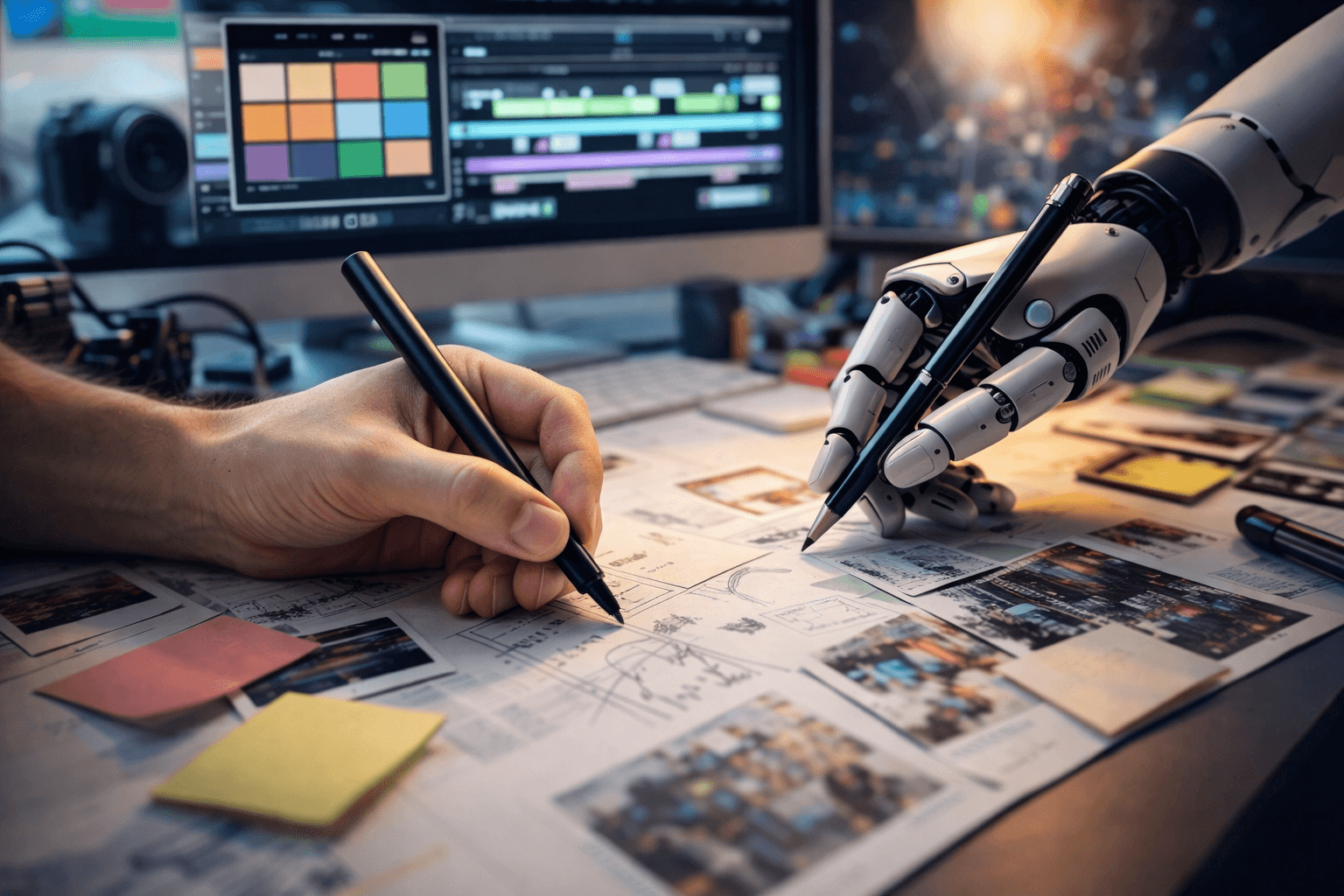
AI is collapsing the cost of production
According to McKinsey, generative AI could automate up to 30% of current work hours by 2030. In creative industries, tools like Midjourney, Runway, and ChatGPT are already replacing tasks that used to take hours.
Copywriting? Faster.
Video editing? Assisted.
Concept art? Instant.
Production is becoming abundant.
And when production becomes abundant, its value drops.
We’ve seen this before. When smartphones put a camera in everyone’s pocket, photography didn’t disappear — it became common. What changed was who stood out.
Abundance increases the value of taste
We are entering a world of infinite content.
Infinite visuals.
Infinite ideas.
Infinite noise.
But attention is still finite.
When everyone can generate, curation becomes power.
The creative advantage shifts from:
“I can make this.”
To:
“I know what should be made.”
That’s not poetic. That’s economic.
When supply explodes, differentiation becomes scarce.
Taste becomes leverage.
Strategy > execution
AI is extraordinary at execution.
It struggles with context.
It doesn’t:
Understand subculture shifts.
Sense when something is about to feel cringe.
Detect brand fragility.
Read the emotional temperature of a room.
The value of a creative in 2026 isn’t manual skill.
It’s:
Pattern recognition
Cultural literacy
Strategic framing
Narrative sequencing
AI can generate.
Humans decide.
The creative becomes a systems designer
The future isn’t “artist vs machine.”
It’s:
Creative + AI = force multiplier.
The highest-leverage creatives now:
Build workflows.
Orchestrate tools.
Design pipelines.
Direct outputs.
Refine prompts into repeatable systems.
They don’t compete with AI.
They design with it.
Less “content creator.”
More creative systems operator.
Data doesn’t kill creativity — it sharpens it
We now understand:
Retention curves.
Hook performance.
Scroll behavior.
Platform incentives.
Audience drop-off patterns.
The creatives who win won’t ignore data.
They’ll integrate it.
Emotion + analytics.
That combination is unfair.
What doesn’t get automated
AI struggles with:
Lived experience.
Real-world tension.
Human proximity.
Taste built from reps.
Navigating rooms.
Managing personalities.
Cultural instinct under pressure.
You can automate production.
You cannot automate perspective.
The real shift
The creative is no longer just a producer.
The creative is:
A curator.
A strategist.
A systems thinker.
A translator between culture and capital.
Execution is being commoditized.
Judgment is becoming premium.
So what’s the value of a creative in the age of AI?
Not speed.
Not tools.
Not output volume.
The value is:
Clarity.
Taste.
Framing.
Direction.
Signal detection.
Narrative control.
AI gives everyone a paintbrush.
The creative decides what belongs on the canvas.